
Independent specialist · Established 2010
Lawn scarification in Oxford
Scarification matched to the lawn and growing conditions.
A light spring tidy-up and a moss-dominated lawn need different treatment. I check the grass, thatch and growing conditions before recommending light maintenance scarification or a more substantial renovation.
Arrange a free assessmentLight maintenance or heavy renovation?
Light maintenance scarification lifts surface debris and light thatch from an established lawn. It is normally considered early in the growing season, once the grass is growing well enough to recover. Removing a heavy build-up of moss needs a different approach.
A badly affected lawn may need an appropriate moss treatment, followed at the correct interval by heavier scarification to remove the dead moss and excess thatch. This can leave the lawn looking open and untidy initially; overseeding and an establishment plan may then be needed.
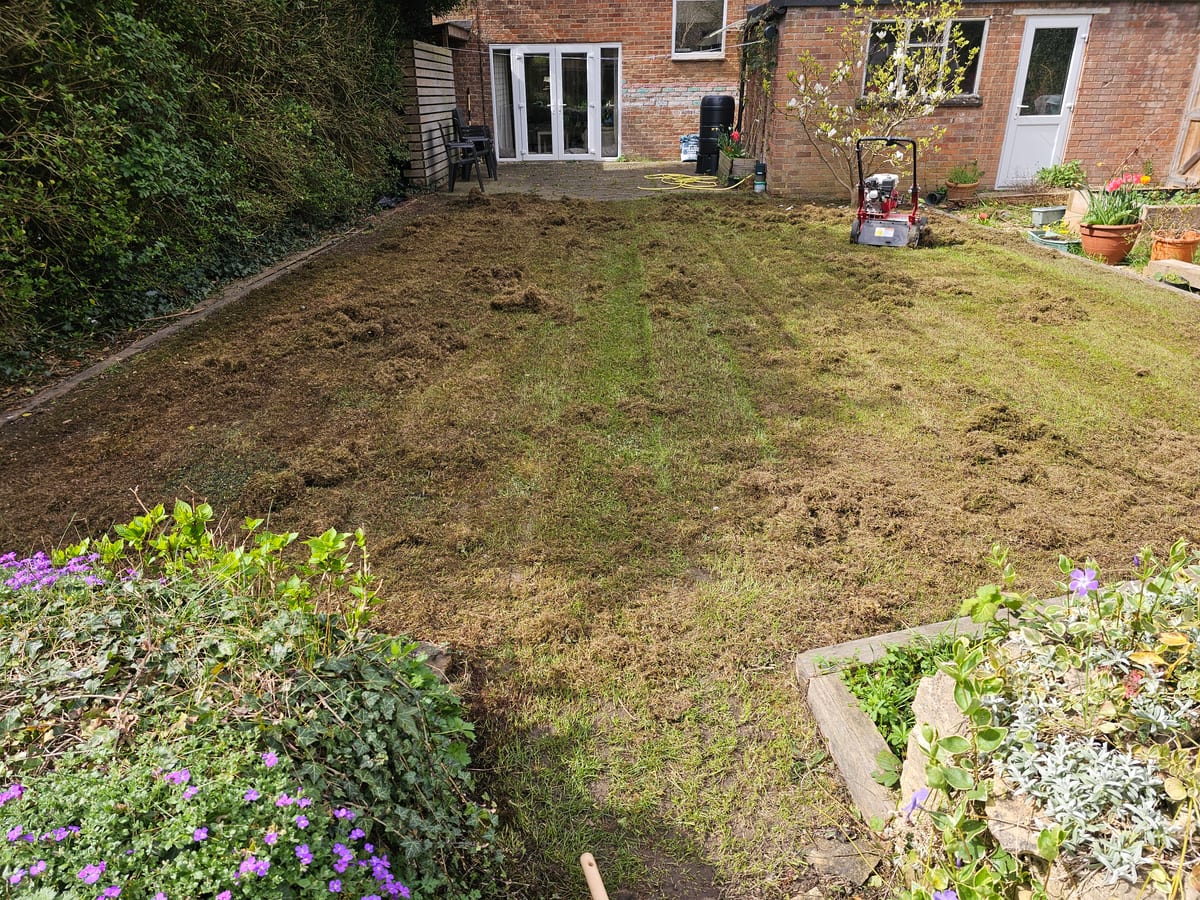
Deal with why the moss is there
Removing moss does not correct shade, wet ground, compaction or mowing too short. Those conditions are assessed first. Improving grass density, sensible mowing and practical changes to light or drainage help make the lawn less inviting to moss and weeds.
Hollow-tine aeration may be recommended if the soil is compacted. Where the lawn and soil conditions allow, aeration, core collection and light scarification can share a visit. Heavy renovation may require separate stages.
When should a lawn be scarified?
Spring or early autumn is often suitable, but the condition of the lawn matters more than a date in the calendar. I avoid aggressive work on drought-stressed, frozen or waterlogged ground. The extent of the work depends on how readily the grass can recover and whether new seed can be kept moist.
What to expect
How the work is carried out
Assess the lawn
Check the thatch, moss, soil and grass density, then agree light maintenance or a separate renovation quotation.
Time the work
Choose suitable growing conditions and observe the label interval after any necessary moss treatment.
Scarify and clear
Use an appropriate working intensity, collect the debris and explain any seeding or recovery work required.
Looking after the lawn afterwards
Allow the lawn time to recover, minimise wear and follow the agreed mowing and watering advice. If the work includes seed, keep the seedbed consistently moist without saturating it; the first cut depends on establishment, not simply the number of days since treatment.
One-off work or ongoing care?
Complete and Premium include one annual light maintenance scarification. Essential does not. Heavy moss removal and full lawn renovation are separately assessed and quoted; they are not included in the annual maintenance scarification.
Compare programmes and pricesQuestions about this treatment
Will scarification stop moss returning?
Not by itself. I also look at why the grass is struggling: shade, persistent moisture, compaction and close mowing are common contributors. The recommendation aims to improve those conditions as well as remove unwanted material.
Is waste taken away?
Debris is collected from the lawn. I agree with you whether the material stays in a suitable on-site area or is taken away, and include any removal charge in the quotation before booking.
How much does one-off scarification cost?
The free assessment checks lawn size, access, the amount of material and the intensity of work needed. You receive a clear quotation showing the agreed work, materials and waste arrangements. No VAT is currently charged.
See the work in real gardens
Explore the starting problems, preparation and established lawns in our own project photographs.